
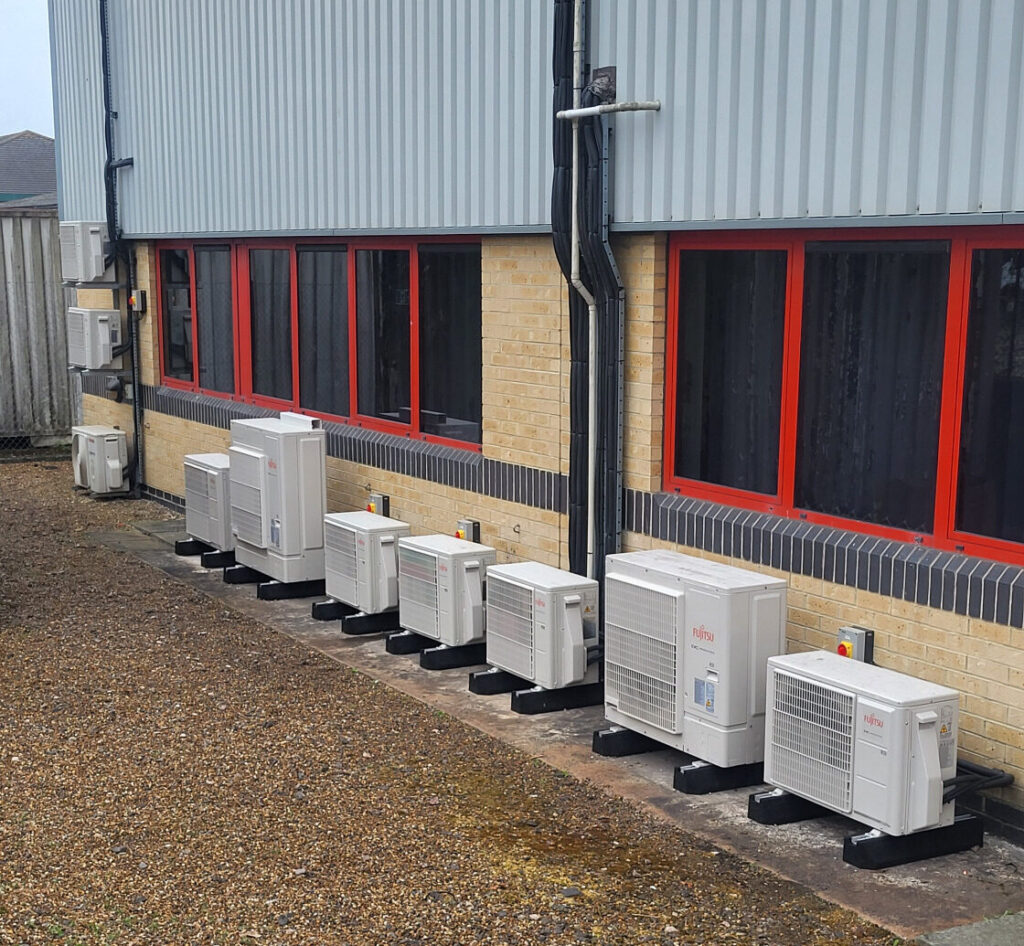
The F-gas phase-down is forcing strategic decisions
The UK commercial HVAC sector is entering a critical transition period.
With ongoing F-gas phase-down regulations tightening the availability of high-GWP refrigerants, many commercial buildings are now facing an uncomfortable reality in that systems installed 8-15 years ago will likely soon become expensive to maintain, or even difficult to service.
Refrigerants such as R404a and older blends continue to be phased down rapidly. As supply reduces, costs increase and in some cases, servicing restrictions are already impacting businesses that delayed upgrading.
For commercial property owners and occupiers, this is no longer a future issue. It’s a 2026 decision.
What does this mean for commercial buildings?
For sectors such as data centres, healthcare facilities, retail environments, office developments and hospitality groups, cooling isn’t optional. It’s operational infrastructure.
Waiting until a system fails can results in:
- Emergency replacement costs
- Operational downtime
- Compliance risks
- Increased energy consumption
- Loss of tenant satisfaction
Forward-thinking companies are now reviewing their estates and planning phased upgrades rather than reacting to breakdowns.
The shift to low GWP refrigerants
Manufacturers such as Daikin, Mitsubishi Electric, Fujitsu and Panasonic have already shifted much of their commercial ranges to lower GWP refrigerants.
These systems are not only more environmentally responsible, they are also typically more energy efficient.
For businesses under ESG pressure or working toward net-zero targets, this isn’t just compliance. It’s reputation.
Energy efficiency is now a top meeting room agenda
Energy prices and carbon reporting requirements are pushing HVAC discussions out of plant rooms and into meetings.
Modern commercial air conditioning systems now offer:
- Smart controls and cloud monitoring
- Predictive maintenance alerts
- Integration with BMS platforms
- Zoning & load optimisation
- Heat recovery functionality
This shifts HVAC from a cost centre to a controllable operational asset.
The real question: upgrade now, or risk reactive spending?
The organisations leading the market in 2026 are not the ones installing the cheapest systems. They are the ones asking:
- What refrigerant does our current estate use?
- What is our exposure to future servicing restrictions?
- How efficient are our current systems compared to modern alternatives?
- What is the lifecycle cost vs replacement strategy?
A planned, phased replacement strategy almost always outweighs an emergency replacement – financially and operationally.
Final thought
Commercial air conditioning in the UK is no longer just about comfort. It’s about compliance. It’s about operational resilience. It’s about energy performance. And increasingly, it’s about long-term asset strategy.
2026 is shaping to be the year many businesses move from reactive maintenance to strategic air conditioning planning.
The question is – will you be ahead of the curve, or responding to it?
A sensible time to review
For many, it isn’t about rushing into replacement. It’s about understanding your position.
- What refrigerants do your current system(s) rely on?
- How might future F-gas servicing restrictions affect your business?
- Would upgrading now reduce lifecycle costs?
- How would modern systems improve energy performance?
- Would a phased upgrade plan reduce long-term risk?
These are strategic questions that are easier (and more cost effective) to answer before there’s urgency.
We’re currently helping commercial assess their existing systems, understand compliance exposure, and build phased upgrade plans that align with operational budget priorities.
If you’d like to begin planning, get in touch with us for an initial conversation. A proactive review today can prevent reactive spending tomorrow.
