
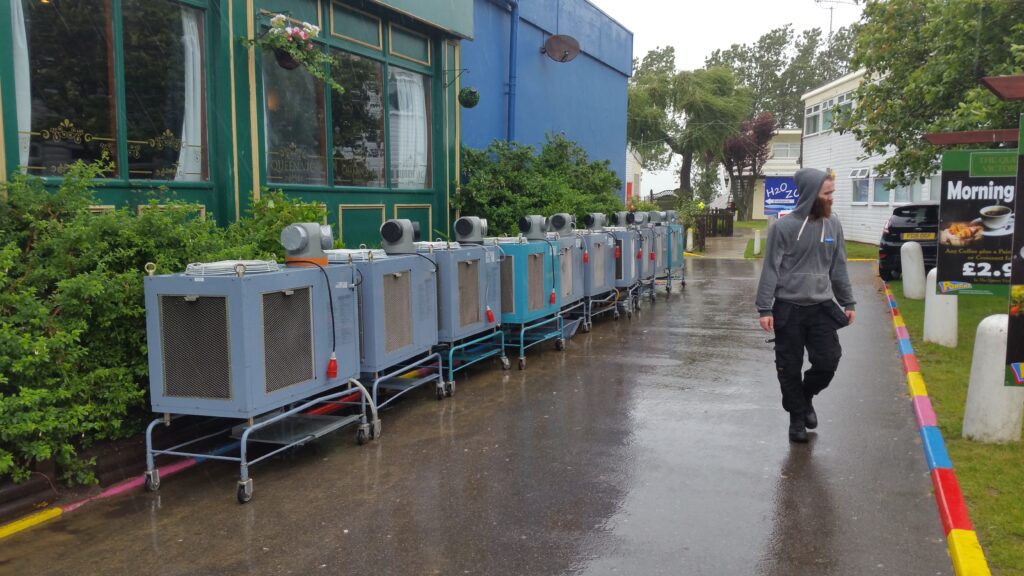
Temporary cooling is often associated with emergency situations – a system failure, unexpected breakdown or urgent call-out.
However, across the UK, temporary air conditioning hire for commercial buildings is increasingly being used as a planned and strategic solution.
From refurbishments to seasonal demand, businesses are recognising the value of portable air conditioning hire as part of a wider HVAC strategy.
What is Temporary Cooling?
Temporary cooling refers to the use of portable air conditioning units or short-term HVAC hire solutions to provide cooling where permanent systems are unavailable, insufficient or temporarily out of service.
These solutions can be deployed quickly and adapted to suit a wide range of commercial environments, including offices, retail spaces, healthcare facilities, and industrial sites.
When is Temporary Air Conditioning Used?
While emergency air conditioning hire remains a key use, many businesses are now using temporary cooling in more planned scenarios.
Refurbishment and Fit-out Projects
During refurbishment or fit-out works, existing systems are often switched off, upgraded or removed.
Temporary air conditioning hire ensures that:
- Staff can continue to work comfortably
- Equipment remains protected
- Projects can progress without disruption
Seasonal Cooling Demand
Even in the UK, warmer periods can place unexpected strain on existing systems.
Short-term air conditioning hire can provide additional capacity during peak demand, helping buildings to maintain comfortable conditions without committing to permanent upgrades.
System Upgrades and Replacement
When permanent systems are being replaced, lead times can create a gap in cooling provision.
Temporary solutions bridge this gap, ensuring operations can continue while new systems are installed.
Events and High Occupancy Periods
Increased occupancy can quickly impact indoor temperatures.
Temporary air conditioning hire provides a flexible way to manage these short-term demands, particularly in commercial or public-facing environments.
The Benefits of Portable Air Conditioning Hire
Using portable AC units for offices of commercial buildings offers several key advantages:
- Business continuity – maintains operations during unexpected or planned changes.
- Flexibility – cooling can be delivered exactly where it is needed.
- Speed of deployment – systems can be installed quickly with minimal disruption.
- Cost control – avoids immediate capital expenditure on permanent systems
Planning Ahead vs Reacting Late
One of the key shifts in the industry is the move from reactive to proactive use of commercial air conditioning hire services.
Waiting until a system fails or temperatures peak can limit options and increase pressure on decision-making.
Planning temporary cooling in advance allows businesses to secure the right equipment, ensure suitable power is available and minimise disruption to operations.
Temporary Cooling as Part of a Wider HVAC Strategy
Temporary air conditioning is no longer just a backup solution.
It is increasingly being used as part of a broader approach to commercial HVAC system management, supporting flexibility, resilience and operational continuity.
For facilities managers and property/estates teams, having access to temporary cooling provides reassurance that buildings can adapt to changing demands.
Final Thoughts
Temporary cooling has evolved beyond emergency response.
Whether supporting refurbishments, managing seasonal demand or bridging system upgrades, portable air conditioning hire in the UK is becoming an essential tool for commercial buildings.
By taking a proactive approach, businesses can ensure they are prepared – not just when something goes wrong, but as part of a well-planned strategy.
